|
1
|
|
|
2
|
- Helium retention in zircons
- Recent Carbon 14 dates
- Radiation and accelerated decay
- Evidence of accelerated mutation rate
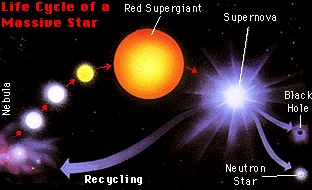
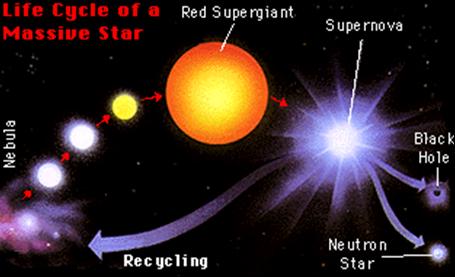
- Evidence of a nearby supernova
- Lack of objects in the Kuiper belt
- Correlation between surface heat flow and the radioactivity of surface
rocks
|
|
3
|
- Many lines of evidence are beginning to fit together into a consistent
picture.
- How much evidence is necessary before a paradigm shift occurs?
|
|
4
|
- Creationists now feel that billions of years worth of radioactive decay
has occurred on earth, giving old isotopic dates, but this decay took
place in only a few thousand years.
|
|
5
|
|
|
6
|
|
|
7
|
|
|
8
|
- HELIUM DIFFUSION RATES SUPPORT ACCELERATED NUCLEAR DECAY
- D. RUSSELL HUMPHREYS, STEVEN A. AUSTIN, JOHN R. BAUMGARDNER, ANDREW A.
SNELLING
- International Conference on Creationism
- Geneva College, Beaver Falls, PA
August 4-9, 2003
|
|
9
|
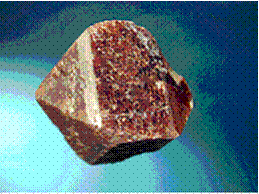
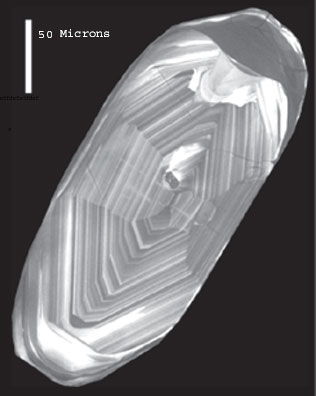
- Two decades ago, Robert Gentry and his colleagues at Oak Ridge National
Laboratory reported surprisingly high amounts of nuclear-decay-generated
helium in tiny radioactive zircons from Precambrian rock. Up to 58% of the helium (that
radioactivity would have generated during the alleged 1.5 billion year
age of the granodiorite) was still in the zircons. Yet the zircons were
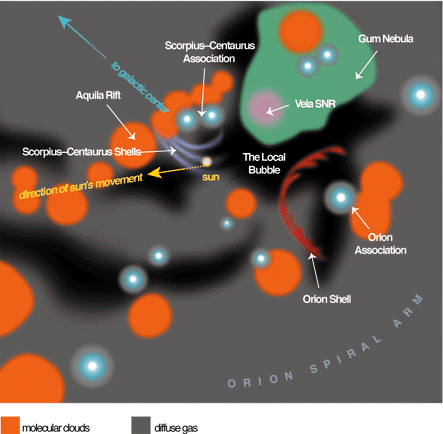
so small that they should not have retained the helium for even a tiny
fraction of that time.
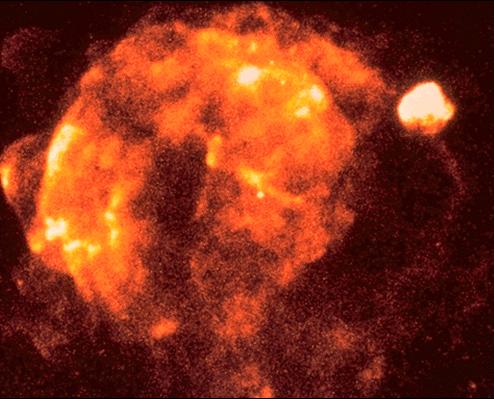
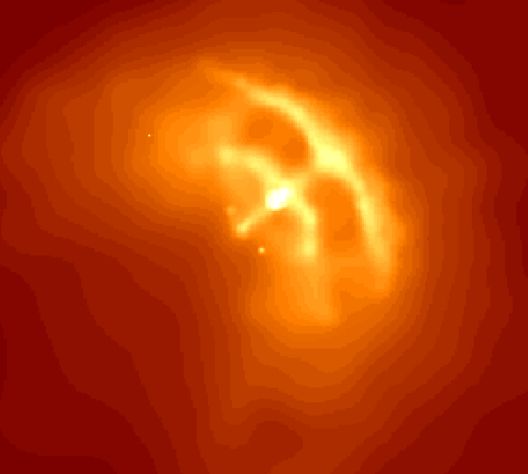
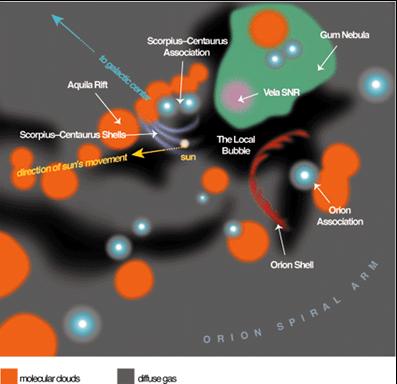
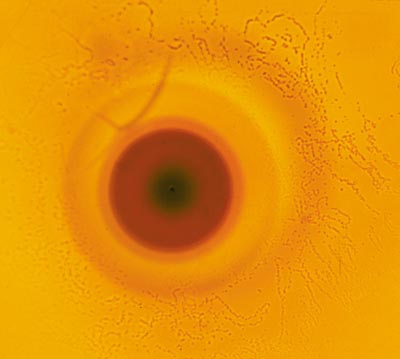
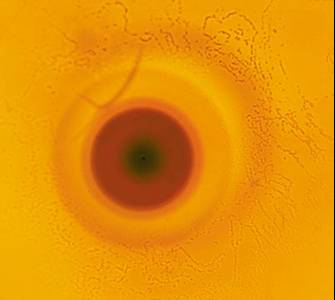
|
|
10
|
- The high helium retention levels suggested to us and many other
creationists that the helium simply had not had enough time to diffuse
out of the zircons, and that recent
accelerated nuclear decay had produced over a billion years worth
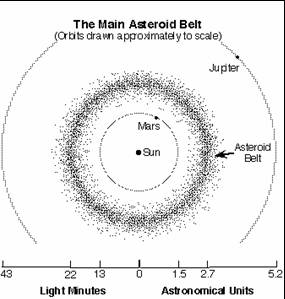
of helium within only the last few thousand years, during Creation
and/or the Flood. Such acceleration would reduce the radioisotopic time
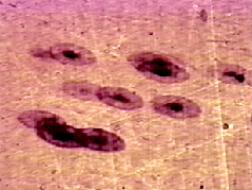
scale from megayears down to months.
|
|
11
|
- However, until a few years ago nobody had done the experimental and
theoretical studies necessary to confirm this conclusion
quantitatively. In 2000 the RATE
project [14] began experiments to measure the diffusion rates of helium
in zircon and biotite. We show
that these data limit the age of these rocks to between 4,000 and 14,000
years. These results support our hypothesis of accelerated nuclear decay
and represent strong scientific evidence for the young world of
Scripture.
|
|
12
|
|
|
13
|
- MEASURABLE 14C IN FOSSILIZED ORGANIC MATERIALS: CONFIRMING THE YOUNG
EARTH CREATION-FLOOD MODEL
- JOHN R. BAUMGARDNER,D. RUSSELL HUMPHREYS, ANDREW A. SNELLING, STEVEN A.
AUSTIN
- International Conference on Creationism
- Geneva College, Beaver Falls, PA
August 4-9, 2003
|
|
14
|
- ABSTRACT
- Given the short 14C half-life of 5730 years, organic materials
purportedly older than 250,000 years should contain absolutely no
detectable 14C. An astonishing discovery made over the past twenty years
is that, almost without exception, when tested by highly sensitive
accelerator mass spectrometer (AMS) methods, organic samples from every
portion of the fossil record show detectable amounts of 14C!
|
|
15
|
- 14C/C ratios from all but the youngest samples appear to be clustered in
the range 0.1-0.5 pmc (percent modern carbon), regardless of geological
‘age.’ A straightforward conclusion that can be drawn from these
observations is that all but the very youngest fossilized organic
material was buried contemporaneously much less than 250,000 years ago.
This is consistent with the Biblical account of a global Flood that
destroyed most of the air-breathing life on the planet in a single brief
cataclysm only a few thousand years ago.
|
|
16
|
- Giem [18] reviewed the literature and tabulated about seventy reported
AMS measurements of 14C in organic materials from the geologic record
that, according to the conventional geologic time-scale, should be 14C
‘dead.’ The surprising result is that organic samples from every portion
of the
- fossil record show detectable amounts of 14C. For the measurements
considered most reliable, the 14C/C ratios appear to fall in the range
0.1-0.5 percent of the modern 14C/C ratio (percent modern carbon, or
pmc).
- 0.1 percent modern carbon corresponds to a computed age of 57,000 years!
|
|
17
|
- The conventional uniformitarian age for these samples is well beyond
100,000 years (in most cases it is tens to hundreds of millions of
years).
- The samples include coal, anthracite, and natural gas, as well as wood,
shells, foraminifera, and other fossils.
Even some Precambrian graphite samples have carbon 14 ages of
about 60,000 years!
- Some of the researchers tried to explain this carbon 14 as
contamination, but none of their attempts to clean it were successful.
|
|
18
|
- AMS analyses reveal carbon from fossil remains of living organisms,
regardless of their position in the geological record, consistently
contain 14C levels far in excess of the AMS machine threshold, even when
extreme pre-treatment methods are applied. Experiments in which the
sample size is varied argue compellingly that the 14C is intrinsic to
the fossil material and not a result of handling or pre-treatment. These
conclusions continue to be confirmed in the very latest peer-reviewed
papers.
|
|
19
|
- Moreover, even non-organic carbon samples appear consistently to yield
14C levels well above machine threshold. Graphite samples formed under
metamorphic and reducing conditions in Precambrian limestone
environments commonly display 14C values on the order of 0.05 pmc. A good question is what possibly could
be the source of the 14C in this material? We conclude that the
possibility this 14C is primordial is a reasonable one.
|
|
20
|
- Not noise
- Not contamination
|
|
21
|
- Dr Baumgardner sent a diamond for C-14 dating. It was the first
time this had been attempted, and the answer came back positive—i.e. the
diamond, formed deep inside the earth in a ‘Precambrian’ layer,
nevertheless contained radioactive carbon, even though it ‘shouldn’t
have’. This is exceptionally striking evidence, because a diamond
has remarkably powerful lattice bonds, so there is no way that
subsequent biological contamination can be expected to find its way into
the interior.
|
|
22
|
- The diamond’s carbon-dated ‘age’ of <58,000 years is thus an upper
limit for the age of the whole earth. And this age is brought down
still further now that the helium diffusion results have so strongly
affirmed dramatic past acceleration of radioactive decay.
|
|
23
|
- The fact that isotopic dates are generally too old by hundreds of
millions of years, but Carbon 14 dates are only too old by thousands of
years, is also evidence for accelerated decay because Carbon 14 decays
much faster.
|
|
24
|
- An ounce of silver + a pound of gold:
Not much difference
- An ounce of silver + a pound of bricks:
Big difference
- $5.00 doesn’t mean much to a millionaire
- $5.00 means a lot to a beggar!
- 100 + 1/10: not much increase
- .001 + 1/10: big increase
|
|
25
|
- Small half life: Decay is frequent
- Large half life: Decay is rare
- Extra decay makes little difference if decay is frequent
- Extra decay makes large difference if decay is rare
- Conclusion:
- Isotopic ages of elements with large half lives should be more affected
by an increase in decay rates
|
|
26
|
|
|
27
|
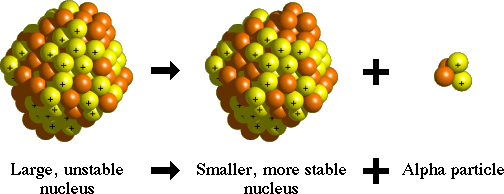
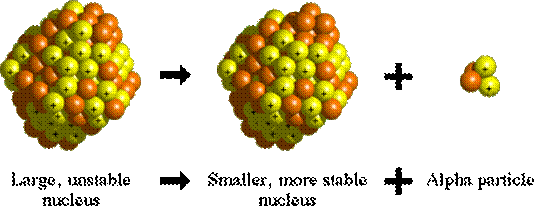
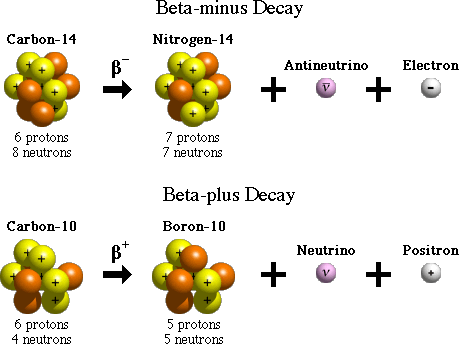
- Alpha decay and beta decay use different processes
- Therefore they may not be affected the same by an increase in the decay
rate
- So discordances between alpha and beta decay ages are an evidence of
disturbed decay
|
|
28
|
- Expected evidence of increase in decay rates:
- Carbon 14 ages much younger than other isotopic ages like K-Ar, U-Pb, et
cetera
- Alpha and beta ages should differ
- Long half live ages more affected than short half life ages
|
|
29
|
|
|
30
|
|
|
31
|
- ABSTRACT: The five-point Rb-Sr whole-rock isochron age of 1.07 Ga for
the diabase sill at Bass Rapids, Grand Canyon, has been regarded for 20
years as an excellent example of the application of conventional
radioisotopic dating. However,
our new K-Ar, Rb-Sr, Sm-Nd and Pb-Pb radioisotope data from eleven
whole-rock samples (eight diabase, three granophyre) and six mineral
phases separated from one of the whole-rock diabase samples yield
discordant whole-rock and mineral isochron “ages.”
|
|
32
|
- These isochron “ages” range from 841.5±164 Ma (whole-rock K-Ar) to
1375±170 Ma (mineral Sm-Nd). Each
method appears to yield concordant “ages” internally between whole rocks
and minerals. It is therefore argued that only changing radioisotope
decay rates in the past could account for these discordant isochron
“ages” for the same geologic event. Furthermore, these data are
consistent with alpha decay having been accelerated more than beta
decay, and with the longer the present half-life the greater being the
acceleration factor.
|
|
33
|
- This is not an isolated phenomenon but is characteristic of isotopic
dates:
|
|
34
|
- Austin has already documented that, when the mineral isochron method is
applied as a test of the assumptions of radioisotopic dating,
discordances inevitably result. According to Austin, four categories of
discordance are found in suites of rocks with a common origin — (1) two
or more discordant whole rock isochron ages, (2) a whole-rock isochron
age older than the associated mineral isochron ages, (3) two or more
discordant mineral isochrons from the same rock, and (4) a whole-rock
isochron age younger than the associated mineral isochron ages. Our
radioisotope data from the Bass Rapids diabase sill exhibit all four
categories of isochron discordance. Thus the assumptions of
radioisotopic dating must be questioned.
|
|
35
|
- Airtight dates disagree:
- An evidence of a change in the decay rates
|
|
36
|
|
|
37
|
|
|
38
|
|
|
39
|
|
|
40
|
|
|
41
|
|
|
42
|
- Slusher (1981, p. 26) reports: Anderson and Spangler maintain that their
several observations of statistically significant deviations from the
(random) expectation strongly suggests that an unreliability factor must
be incorporated into age-dating calculations. Such irregularities were observed for
carbon 14, cobalt 60, and cesium 137. The source for this information is
Anderson, J.L. and Spangler, G.W., "Radiometric Dating: Is the
`Decay Constant' Constant?", Pensee, p. 31.
|
|
43
|
- Even Dalrymple (1984, p. 88) recognizes such irregularities: Under
certain environmental conditions, the decay characteristics of 14C,
60Co, and 137Ce, all of which decay by beta emission, do deviate
slightly from the ideal random distribution predicted by current theory
... , but changes in the decay constants have not been detected. Dalrymple cites the references
Anderson, J. L., 1972, Non-Poisson distributions observed during
counting of certain carbon-14-labeled organic (sub) monolayers, Phys.
Chem. J. 76: 3603-3612 and Anderson, J.L.and G.W. Spangler, 1973, Serial
statistics: Is radioactive decay random? Phys. Chem. J. 77: 3114 - 3121.
|
|
44
|
- What could have sped up decay rates? The following comment by Keith
Wanser, a creationist physicist, quoted in Creation Ex Nihilo 21(4) p.
40 is significant: Actually, it turns out that when you get the nucleus
"excited", decay is going to be much quicker, making things
look vastly "older". People have been talking recently about
magnetic stars giving off big bursts of gamma rays; there are all sorts
of ways that radiometric "clocks" could have been reset
catastrophically, during the Flood, for example.
|
|
45
|
- “Furtive Glances Trigger Radioactive Decay," Science 2 June 2000
vol 288 page 1564
- This article shows how interactions with elementary particles can cause
decay rates to increase. One such
particle is the neutrino, and supernovas produce many neutrinos.
|
|
46
|
- A recent result (Science 26 April 2002 vol. 296 page 633) implies that
neutrinos interact with matter much more readily than previously
thought: “The results also show that another property of neutrinos,
related to how they interact with matter, known as the mixing angle,
must be large, rather than small, contrary to what physicists believed
until quite recently.”
|
|
47
|
- Where did all the radiation come from to speed up decay rates?
|
|
48
|
|
|
49
|
|
|
50
|
|
|
51
|
|
|
52
|
- Gamma rays may have devastated life on Earth 24 September 03 New
Scientist A devastating burst of gamma rays may have caused one of
Earth's worst mass extinctions, 443 million years ago. A team of astrophysicists and
palaeontologists says the pattern of trilobite extinctions at that time
resembles the expected effects of a nearby gamma-ray burst (GRB).
|
|
53
|
|
|
54
|
- GRBs are the most powerful explosions known. As giant stars collapse
into black holes at the end of their lives, they fire incredibly intense
pulses of gamma rays from their poles that can be detected even from
across the universe for 10 seconds or so.
|
|
55
|
- Now Melott believes he has palaeontological evidence that this actually
happened at the end of the Ordovician period 443 million years ago,
causing one of the five largest extinctions of the past 500 million
years.
|
|
56
|
- The researchers found that species of trilobite that spent some of their
lives in the plankton layer near the ocean surface were much harder hit
than deep-water dwellers, which tended to stay put within quite
restricted areas.
- Melott says this unusual pattern could be explained by a GRB, which
would probably devastate creatures living on land and near the ocean
surface, but leave deep-sea creatures relatively unharmed.
|
|
57
|
- Supernova "smoking gun" linked to mass extinctions
09 January 02 New Scientist
- They found atoms of a very rare isotope of iron, 60Fe, in cores taken
from the ocean floor. 60Fe is rare in the solar system because it has a
half-life of 1.5 million years. The German group suggested that the iron
arrived on Earth as fallout from a nearby supernova about two million
years ago.
|
|
58
|
- This is about the time that fossil records indicate that many marine
molluscs went extinct. Donald Clayton, an astronomer at Clemson
University, says the story appears consistent: "The amount of 60Fe
found in deposits is about what you might expect from a supernova going
off about 100 light-years away." Clayton says 60Fe would be blasted
towards Earth when high energy neutrons from the supernova core smack
into iron atoms in its outer shell.
|
|
59
|
- Supernova poised to go off near Earth
10:30 23 May 02 New Scientist. A student
at Harvard University has stumbled across the terrifying spectacle of a
star in our galactic backyard that is on the brink of exploding in a
supernova. It is so close that if it were to blow up before moving away
from us, it could wipe out life on Earth.
|
|
60
|
- We are only 150 light years away from HR 8210 at present - well short of
the 160 to 200 light years thought to be the minimum safe distance from
a supernova. If it did let fly, the high-energy electromagnetic
radiation and cosmic rays it released would destroy Earth's ozone layer
within minutes, giving life little chance of survival. "The fact
that there's such a system so close to us suggests maybe these objects
are not so rare," says Latham.
|
|
61
|
- But which supernova might have been responsible for the increase in
decay rates?
|
|
62
|
- The Gum Nebula is a huge constellation in the Southern hemisphere, about
1000 light years away, and extending over at least 40 degrees of the
sky. The Gum Nebula is thought to be the remnant of one or more ancient
supernovae. One pulsar in this region, perhaps not associated with the
Gum Nebula, is the Vela Pulsar, which is about 800 light years away and
estimated to be about 11,000 years old.
|
|
63
|
- However, if the dating of pulsars is wrong, as has recently been
suggested, then the Vela Pulsar could be much younger, and may have
arisen only 4,500 years ago, or about the time of the Flood. The Vela
supernova remnant is now about 230 light years across and covers over
100 times the sky area of the full moon.
|
|
64
|
- Vela Supernova Remnant in X-ray
|
|
65
|
- Vela Pulsar: Neutron Star-Ring-Jet
|
|
66
|
|
|
67
|
- Another evidence of a recent creation:
comets
|
|
68
|
|
|
69
|
|
|
70
|
- Kuiper belt – supposed source of short period comets – was recently
found to have only 4 percent of the necessary objects!
- (Science 5 Sept. 2003 vol. 301
page 1304 “Comet 'Factory' Found to Have
Too Little Inventory”)
- Comets must have been recently produced, then, by some kind of a
catastrophe.
|
|
71
|
|
|
72
|
- Correlation between surface heat flow and the radioactivity of surface
rocks (RATE book, page 80)
- Robert Gentry claims to have found "squashed" polonium haloes
as well as embryonic uranium radiohaloes in coal deposits from many
geological layers claimed to be hundreds of millions of years old. (See
the Oct. 15, 1976 issue of Science.)
|
|
73
|
|
|
74
|
|
|
75
|
- Helium retention in zircons
- Recent Carbon 14 dates
- Radiation and accelerated decay
- Evidence of accelerated mutation rate
- Evidence of a nearby supernova
- Lack of objects in the Kuiper belt
- Correlation between surface heat flow and the radioactivity of surface
rocks
|
|
76
|
- Many lines of evidence are beginning to fit together into a consistent
picture.
- How much evidence is necessary before a paradigm shift occurs?
|
|
77
|
- Revelation 14
6 And I saw another angel fly in the midst of
heaven, having the everlasting gospel to preach unto them that dwell on
the earth, and to every nation, and kindred, and tongue, and
people,
7 Saying with a loud voice, Fear God, and give
glory to him; for the hour of his judgment is come: and worship him that
made heaven, and earth, and the sea, and the fountains of waters.
|
|
78
|
|

 Notes
Notes